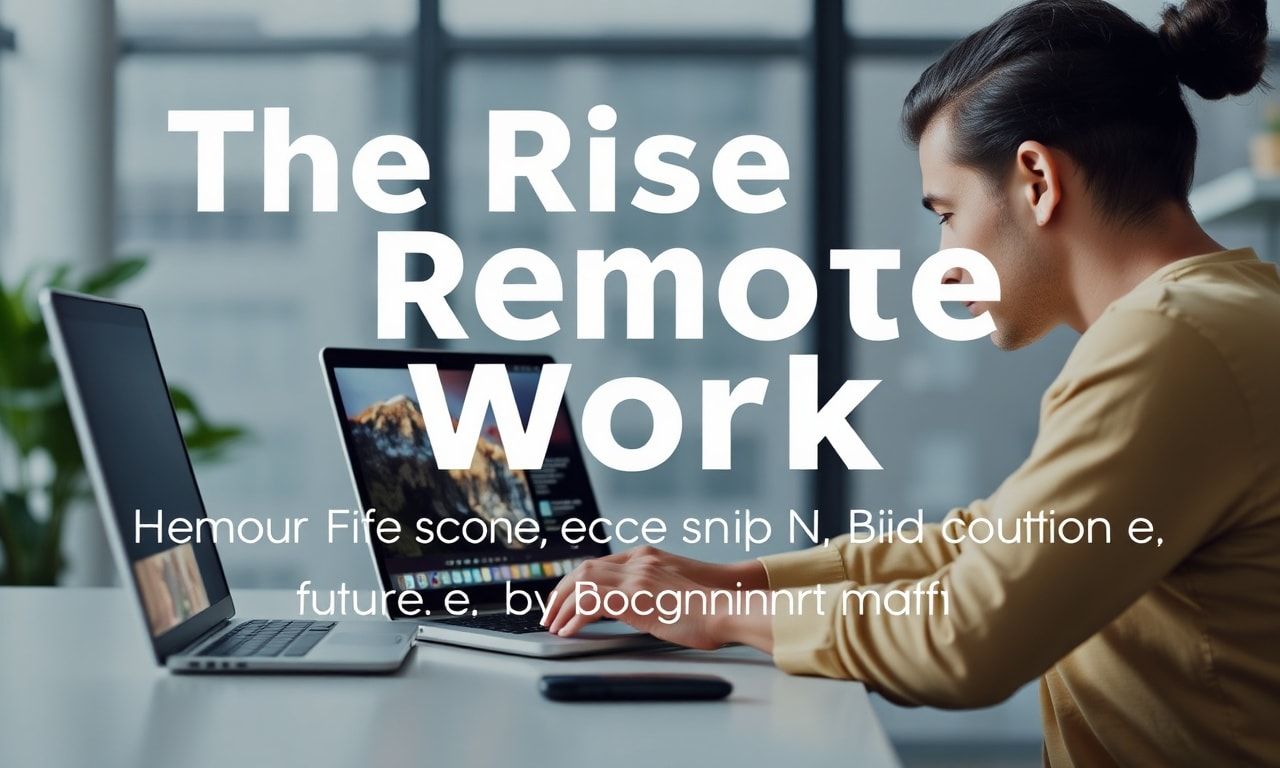
The New Normal: Remote Work Takes Center Stage
The global pandemic has undeniably altered the landscape of the modern workplace. With social distancing measures and lockdowns becoming the norm, remote work has transitioned from a perk to a necessity. This shift has not only changed how we work but also where we work, leading to a significant increase in the adoption of remote work practices across various industries.
According to a recent study by Gallup, the percentage of employees working remotely full-time has surged from 3% pre-pandemic to a staggering 62% in 2020. This dramatic shift highlights the adaptability of businesses and employees alike, as they navigate the challenges and opportunities presented by remote work.
The Impact of Remote Work on Productivity
The debate surrounding the impact of remote work on productivity has been a hot topic. While some argue that the lack of a traditional office environment can lead to distractions, others contend that remote work can enhance productivity by reducing commute times and offering a more flexible schedule. A study by Stanford University found that remote workers were 13% more productive than their in-office counterparts, attributing this increase to fewer breaks and a quieter working environment.
For those looking to maximize their productivity while working remotely, resources like the remote work tips productivity guide can provide valuable insights and strategies. From setting up an ergonomic workspace to leveraging productivity tools, these guides offer practical advice to help remote workers thrive in their new environments.
Technological Innovations Driving Remote Work
The rapid advancement of technology has been a critical enabler of remote work. Tools such as video conferencing platforms, project management software, and cloud-based collaboration tools have made it possible for teams to stay connected and productive regardless of their physical location. Platforms like Zoom, Microsoft Teams, and Slack have become indispensable in facilitating communication and collaboration among remote teams.
Additionally, the rise of smart home technology has further enhanced the remote work experience. Smart home devices, such as smart speakers, smart lighting, and smart thermostats, can create a more efficient and comfortable work environment. These innovations not only improve productivity but also contribute to a better work-life balance.
Challenges and Solutions in Remote Work
Despite the numerous benefits, remote work also presents its own set of challenges. Issues such as isolation, communication barriers, and the blurred line between work and personal life can impact the well-being and productivity of remote workers. Addressing these challenges requires a proactive approach from both employers and employees.
Employers can foster a sense of community and belonging by organizing virtual team-building activities and regular check-ins. Providing access to mental health resources and promoting a healthy work-life balance can also help mitigate the negative effects of isolation. For employees, setting clear boundaries and creating a dedicated workspace can help maintain a healthy separation between work and personal life.
The Future of Remote Work
As the world continues to adapt to the new normal, the future of remote work looks promising. Many companies have announced plans to adopt a hybrid work model, combining remote work with in-office work to offer employees greater flexibility. This shift is expected to lead to a more diverse and inclusive workforce, as geographical barriers are no longer a limiting factor.
The rise of remote work has also sparked a wave of innovation in the tech industry, with new tools and platforms being developed to meet the evolving needs of remote workers. From virtual reality meeting spaces to AI-powered productivity tools, the future of remote work is filled with exciting possibilities.
In conclusion, the rise of remote work is a testament to the resilience and adaptability of the modern workforce. As technology continues to evolve, the way we work will undoubtedly undergo further transformations, shaping the future of employment in ways we are only beginning to imagine.
In the realm of seafaring, a technological revolution is underway, as detailed in smart tech in yachting.
As remote work and indoor activities continue to rise, understanding how to create a healthy lifestyle at home is more important than ever; explore practical tips in wellness strategies for indoor living.
In a world increasingly shaped by technology, Bristol’s unique solution to loneliness offers a compelling look at how communities are adapting to the challenges of our digital age.